
In partnership with

Reach over 8 million engaged tech professionals

The tech decision makers you're trying to reach read TLDR every morning. They aren't scrolling past ads in a feed. They're reading content they trust, curated by engineers at companies like OpenAI, Google DeepMind and Meta.
TLDR reaches 8 million tech professionals across 14 newsletters, with a 41%+ average open rate. Pick the audience you sell to: developers, AI builders, security engineers, product leaders and more.
Paid social can buy reach, not attention. Plaid drove 20.1x ROI and $382K in pipeline from its last TLDR campaign.
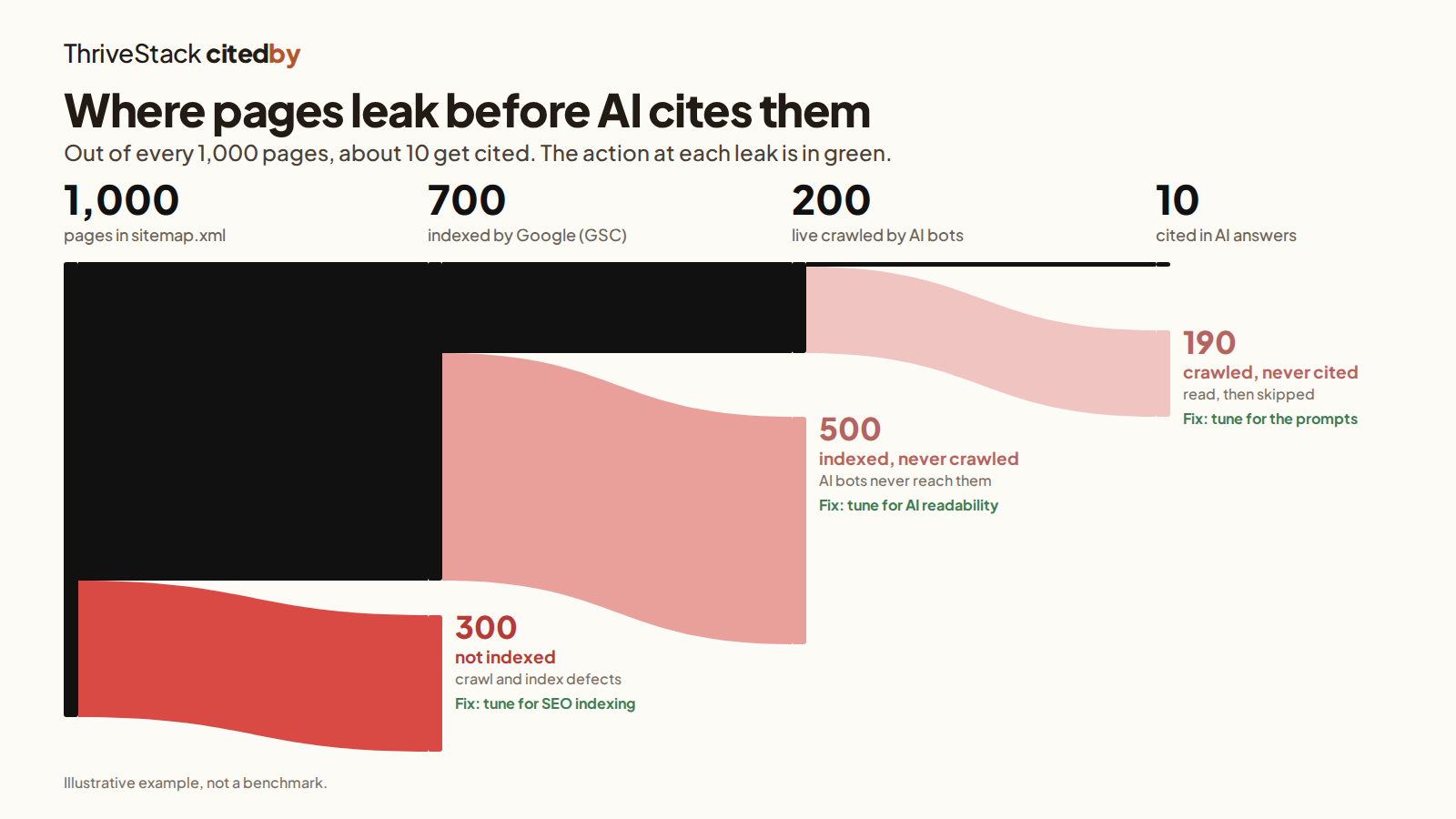
In June 2025, Cloudflare measured Claude’s crawler at nearly 71,000 page requests for every referral it sent. Cloudflare says the ratio may run high, because Claude app traffic carries no referrer. Even so, bots take far more than they send back. And your analytics saw none of it.
That is the case for reading your AI crawler logs. A server log is the only record of what an AI engine did on your site. This issue is the short version of our research on AI crawler logs. You will leave with a way to sort every page into a fix.
GA4 and tag-based tools never see those visits.
1. Why can’t GA4 or a rank tracker see AI crawlers?
GA4 counts a visit when a script runs in a browser. AI crawlers read the raw HTML and leave. The script never fires, so the visit never reaches your dashboard. Heatmaps and most attribution tools share the blind spot (Vercel and MERJ, 2024).
AI answers also change from run to run. There is no rank to check. Your server log has none of these problems. It records the request itself: which bot, which URL, which status code came back.
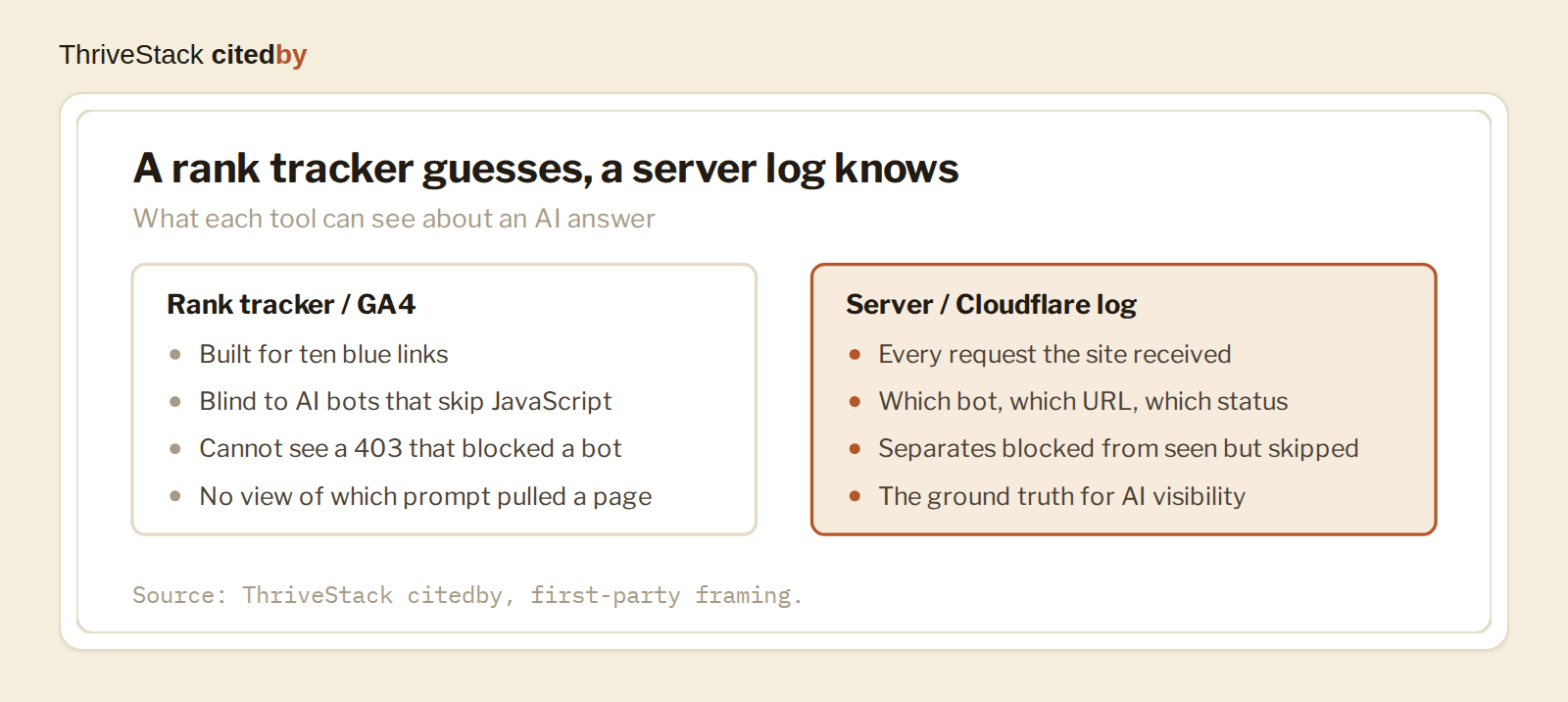
What a rank tracker or GA4 can see about an AI answer versus what a server log can see. Same figure as the research article. ThriveStack citedby framing.
2. Which three bots show up in your log?
Function matters more than the company name. Training bots feed the model. Retrieval bots build the index that answers draw from. Live fetch bots grab a page for one live prompt.
Training: GPTBot, ClaudeBot, CCBot. They send no traffic and earn no direct citations. Retrieval: OAI-SearchBot, PerplexityBot, Claude-SearchBot. Block them and you cannot be cited. Live fetch: ChatGPT-User, Perplexity-User, Claude-User. These line up with citations and clicks.
Blocking training bots does nothing for your citations. Blocking retrieval or live fetch bots quietly removes you from answers. And a big crawl count proves little. Cloudflare found that training made up nearly 80% of AI bot crawling in July 2025.
 | Aleyda Solís Orainti · on AI search crawlability |
3. What does one log line tell you?
Three lines, three different problems. A 403 to a live fetch bot means the edge turned it away. You dropped out of the answer and analytics never noticed. A 200 to a retrieval bot with no citation means the bot read you and picked someone else. That is a content gap, not a block.
A 200 to ChatGPT-User, followed by a human arriving from chatgpt.com, is a confirmed citation that earned a click. Find those pages and copy what they do.
4. How do you turn logs into a fix list?
Cross two lists. List one is what your logs say each bot did. List two is what your prompt tracker says each prompt returned. The overlap sorts every page into one of five buckets.
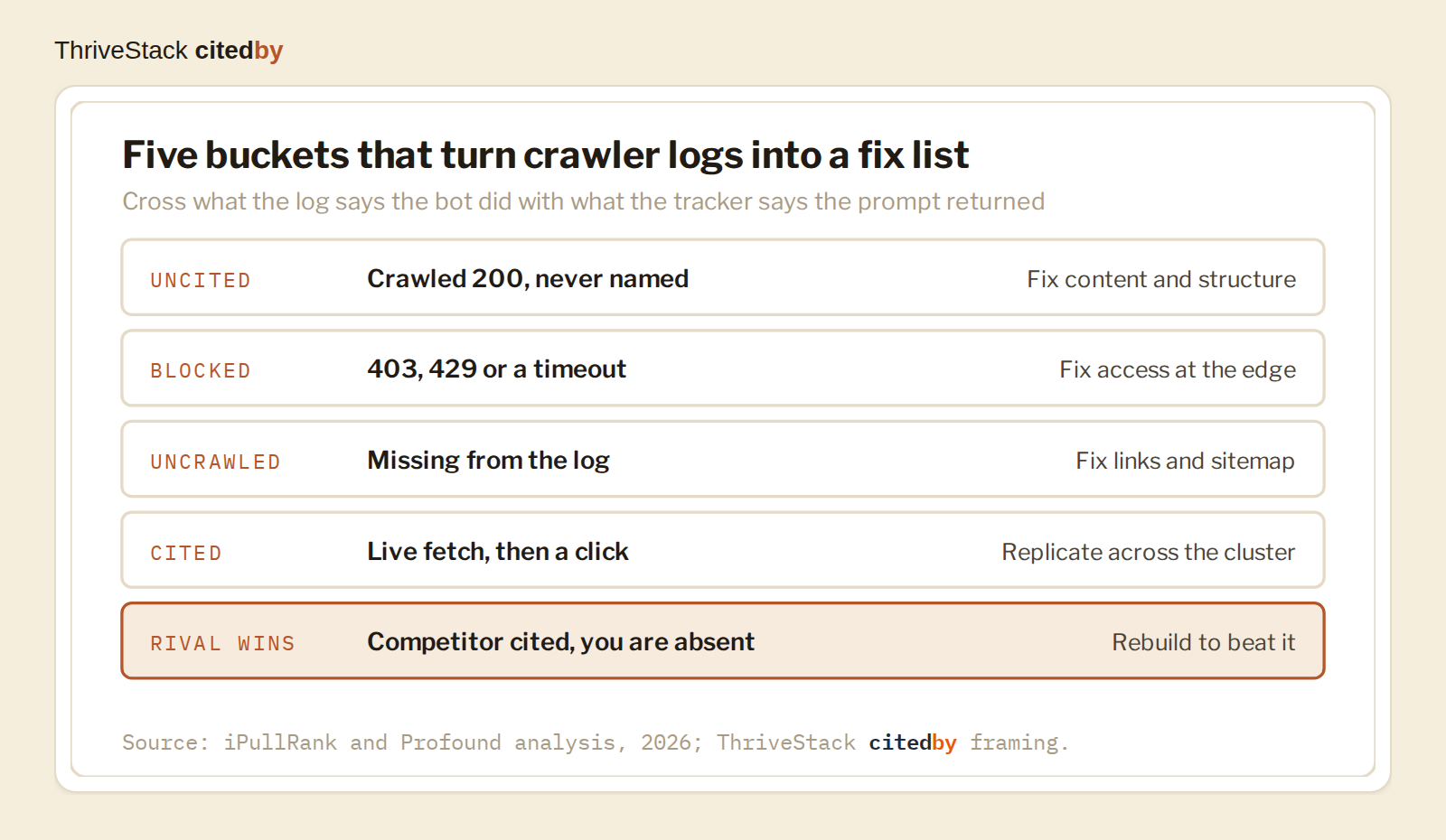
Five buckets that turn crawler logs into a fix list. Same figure as the research article. ThriveStack citedby framing.
Crawled but not cited: fix content and structure. Blocked (403, 429 or a timeout): fix access at the edge. Never crawled: fix internal links and the sitemap. Cited and clicked: replicate the page across the topic cluster. Competitor wins: study their page and rebuild yours.
Each half is useful alone. The value is in the join.
5. Which pages are wasting your crawl budget?
Start with access. If a retrieval or live fetch bot cannot reach a page, no content work matters. Clear every 403, 429 and timeout. Check robots.txt and your CDN bot rules, since hosting defaults often block AI crawlers without telling you.
Next, look at the pages that never show up in the log. Add internal links, clean up the sitemap, and fix slow pages that time out. Then make each page easy to lift: a short answer on top, clear question headings, real numbers with sources.
6. How do you pull the logs?
Use edge logs. Cloudflare Logpush and Vercel Log Drains both work, and a plain server has access logs. A bot blocked at the edge never reaches your origin, so origin logs miss it. User agents are easy to fake. Check each bot against the vendor’s published IP list before you trust it.